

For an 11th consecutive night on July 22, 2026, the US military bombarded the regions of Sirik and Tabriz, as well as the city of Chabahar in southeastern Iran; yet Iranian retaliation proved manifold. With a new wave of missile and drone attacks, they struck Kuwait with extreme intensity. Powerful explosions echoed across Bahrain, while the American Ali Salem base became a primary target. US air defenses in Kuwait and Bahrain, alongside surveillance assets, have suffered a devastating blow from Iranian forces. American officials recognize the impasse and are virtually begging for dialogue. "We will offer a new opportunity for negotiations," they emphasize. Furthermore, US President Trump stressed that behind-the-scenes talks with Tehran are currently underway. The situation in the Strait of Hormuz will have no impact on the US mid-term elections on November 3, 2026.
US air defenses in Kuwait and Bahrain collapse – Chaos from explosions at the US Ali Salem base in Kuwait
Following the launch of a new wave of missile and drone strikes targeting American positions in the region, Kuwait's Ali Salem air base came under heavy missile bombardment. Simultaneously, sources report powerful explosions in Bahrain, signaling a broadening conflict zone across the entire Persian Gulf. Field reports and Arab news outlets highlight the expanding scope of military operations and the commencement of heavy missile and unmanned aircraft strikes against US military interests and installations. Suicide drones and precision missiles struck the Ali Salem facility in Kuwait. The air base, which serves as one of the primary deployment hubs for US military personnel and equipment in Kuwait, was the chief target of these barrages. Regional media reported massive detonations within the base perimeter, confirming that suicide drones successfully struck their intended targets. Following these developments, the Kuwaiti military claimed that national air defense systems, operating alongside US defensive batteries, were actively engaging incoming Iranian missiles.
Severe explosions reported in Bahrain
Concurrent with developments in Kuwait, several powerful detonations rocked Bahrain. According to initial reports, local sources attributed the series of explosions to a fresh wave of strikes targeting critical infrastructure and military interests within the country.
US strikes Iran for 11th consecutive night – Sirik, Tabriz, and Chabahar targeted
The United States launched a new wave of strikes against Iran, US Central Command announced via social media: "US Central Command forces have begun striking military targets in Iran for an 11th consecutive night." Meanwhile, Iranian news outlets report widespread explosions in the regions of Sirik and Tabriz, as well as the city of Chabahar in the country's southeast. Air defense batteries across Tehran were also activated. According to Axios, regional mediators presented Washington with a 10-day ceasefire proposal. Sources indicate the White House is actively reviewing the draft while urging Israel to avoid actions that could lead to further escalation. However, Washington is simultaneously preparing for a potential failure of diplomatic talks by expanding its military footprint in the region.
Trump: Behind-the-scenes negotiations ongoing with Iran – Hormuz will not affect the Nov 3 US elections
US President Trump claimed that covert talks with Iran are progressing: "They are persistently pressing to meet with me, but we are not interested in such a meeting." At the same time, he emphasized that the operational status of the Strait of Hormuz will exert zero influence on the upcoming US elections. Turning to Lebanon, he noted: "We had productive meetings and we will resolve many issues related to Lebanon. In my view, Lebanon is a country that has been neglected for years and has suffered greatly. We will solve many of Lebanon's problems, and we have already resolved some. Following the decisive action we took against the Houthis, we no longer had issues with them. But if necessary, we will deal with them severely again. There are behind-the-scenes talks with Iran, and they urgently seek a meeting with me, but we are not interested in that meeting right now. Communications with Iran continue, and they want this to end because they are taking heavy losses. We will not consider such a meeting until they are ready for meaningful and productive dialogue. Iran cannot and will not possess nuclear weapons. We have severely degraded their capabilities," Trump stressed. "If something happens in the Red Sea, we will simply deal with it. If Iran continues targeting commercial shipping, we will hit them with 10 times greater force. The blockade at the Strait of Hormuz remains, and no one passes through," the American President stated. "Our new agreement will be as solid as a wall. Therefore, Iran cannot obtain a nuclear weapon right now, and it would take them years to build one." Addressing foreign media claims that Iran moved uranium stockpiles and centrifuges into underground facilities, Trump declared: "We will soon target that region."
US Secretary of State Marco Rubio accuses Iran of unserious negotiations... comes under attack from Russia
US Secretary of State Marco Rubio accused Iran of failing to approach negotiations in good faith. "The problem is that they are not taking negotiations seriously at this moment. If they become serious, then we are serious too," he stated during the ASEAN Foreign Ministers' Meeting. According to the Secretary of State, if this posture persists, Washington will take all necessary measures to safeguard the vital interests of the United States and its regional allies. "The United States remains committed to diplomacy. We are open-minded and always willing to engage in negotiations to resolve disputes. That principle continues to apply to Iran. Unfortunately, although we have reached agreements in the past, they have failed to uphold their commitments. The problem we face right now is that they lack serious intent in talks. If they act seriously, so will we. If not, we will do whatever is necessary to defend our interests and those of our partners," Marco Rubio emphasized.
Dangerous precedent in Hormuz
"If we establish a precedent in the Middle East where a single state can decide to control an international waterway, impose tolls, and blow up ships if you don't pay, we will create a highly dangerous precedent that will be replicated in other maritime zones globally, including this region. Therefore, what is at stake here extends far beyond events in the Strait of Hormuz. There is a fundamental principle regarding the freedom of navigation. If that is threatened, the global economy and the rules underpinning international trade for 150 years are threatened as well. That cannot be allowed to happen," the US Secretary of State pointed out. In response, Russian Foreign Ministry spokesperson Zakharova stated that the entire world now understands what "Western-style negotiations" mean—using agreements as a cover to prepare for military conflict.
Israel disinterested in joining the US-Iran conflict

Trump's plan for a ground assault in southern Iran is doomed to fail
US strikes against bridges and Iranian logistical assets lead some analysts to speculate that American forces may launch a ground assault on certain Iranian islands and coastal zones in an attempt to land forces on those shores. This scenario has been examined repeatedly from multiple operational perspectives. Various operational scenarios have been evaluated, but in practice, the primary objectives remain twofold:
-
The US seeks to apply maximum military pressure on Iran ahead of new negotiations.
-
Reopening the Hormuz passage by establishing dominance over the Persian Gulf coastline.
Whichever scenario proves accurate, an amphibious attack would likely see American forces attempting to secure only southern coastal strips and offshore islands while avoiding deeper inland penetration, major urban combat, or a full-scale war. Bombing bridges and supply routes leading to the southern provinces indicates an effort to slow the mobilization speed of Iranian ground units, allowing US forces time to fortify coastal defensive positions.
Infiltration and seizure
Under this scenario, American command intends to utilize a strategy of localized infiltration and area seizure during a ground attack against Iran. Through this approach, forces seek to secure the perimeter by establishing defensive fortifications (including defensive lines, radar networks, missile batteries, and air defense systems) outside the occupied zone, avoiding further advances or force dispersal across different regions. This operational strategy contains inherent flaws. These vulnerabilities could allow Iran to inflict heavy losses on US forces and deny American objectives. The key characteristics of this strategy include:
A. Proximity to American positions, placing the Iranian military in direct contact with US forces. B. Static positioning and prioritized defensive encampments over dynamic offensive advances. C. Severe logistical constraints and distance from supply bases for ammunition and food. D. Harsh geographical and climatic limits, including arid terrain, extreme heat, and unfamiliarity with local topography.
When combined with Iran's asymmetric capabilities, these four factors could precipitate a military setback for the United States and a tactical advantage for Iran.
Iran's close-quarters combat capabilities
Iran's capabilities in close-quarters combat remain formidable. This capability stems both from physical proximity to opposing positions and specialized military assets. The most critical capabilities include:
A. Iranian artillery
The proximity of US ground forces activates short-range Iranian artillery, maximizing its fire volume. Due to its ballistic trajectory and high rate of fire, standard artillery fire cannot be intercepted by enemy missile defense networks, enabling heavy damage against US defensive positions.
B. Drones and FPVs
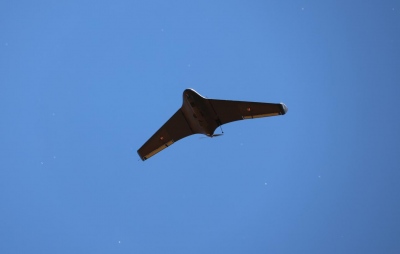
Iranian attack drones and FPVs specialize in striking enemy assets at close range. Across the expansive southern terrain, these uncrewed systems provide high operational utility; despite radar detection risks, their sheer numbers and short flight times enable severe damage against target positions. This tactical dynamic was previously demonstrated during the Hezbollah-Israel conflict, where Hezbollah inflicted significant casualties using micro-drones and FPV drones in close proximity to command positions.
C. Geography and war doctrine
Iran's military doctrine, officially designated as "mosaic defense," provides extensive defensive flexibility. The enemy's lack of familiarity with Iranian geography, strategic positions along the southern coast, extreme weather, and Iran's capacity for short-range guerrilla tactics and naval warfare represent structural advantages for Iranian forces during a ground invasion.
Associated Press: Over 500 Americans wounded
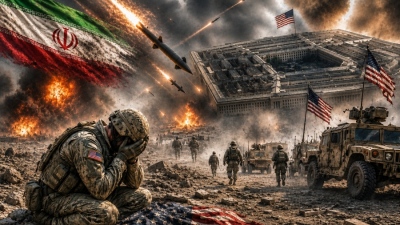
More than 500 American military personnel have been wounded during the war in Iran, according to the Associated Press. The report notes that the wounded tally has surpassed 500, a figure higher than the official count released by the Pentagon, which cites 482 wounded service members.
www.bankingnews.gr







Σχόλια αναγνωστών